
Can Autism Be Passed Down Through Generations?
Many families naturally wonder whether or not autism can be inherited. Research shows that autism develops through a complex combination of genetic and environmental factors. Can autism be passed down through generations? is a common question among parents and researchers, especially since autism can appear in multiple family generations without following a simple inheritance pattern. Additionally, there is no single cause that explains every autistic person’s experience.
Can Autism Be Passed Down Through Generations?
Because autism can appear differently from one person to another, understanding family patterns is not always straightforward. Some families may notice similar traits in parents, siblings, grandparents, or extended relatives, while others may have no recognised history at all. Researchers believe these patterns are connected to a combination of inherited genetic variations and developmental influences, which is why autism is viewed as a complex and highly individualised neurotype.
The Role of Genetics in Autism
Understanding Genetic Influence
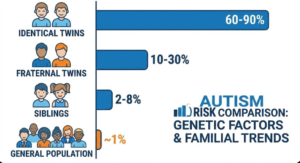
Studies of families and twins consistently show that autism has a strong genetic component. Autistic traits often emerge across generations, suggesting that inherited genetic variations can, in fact, increase the likelihood of autism appearing within a family. However, inheritance is not guaranteed. Having autistic relatives does not mean every family member will be autistic or that autism will look the same in each person. As the axiom goes, everyone is unique.
Many researchers exploring Can Autism Be Passed Down Through Generations point to the complex interaction between inherited genes and developmental factors. Autism reflects natural variation in neurodevelopment and is shaped by multiple genes working together rather than one single inherited factor.
Multiple Genes and Shared Traits
Scientists have identified numerous genes linked to autistic traits, and not just one. Each of these genes contribute slightly to overall neurodevelopment. They influence areas in the brain such as sensory processing, communication, attention, and learning styles. As I always say nowadays, Autism is simply a neurotype—affecting our social interactions, how we communicate with one another, how we learn, and how we behave.
Importantly, these genetic traits can exist even when no one in a family has been formally diagnosed with Autism Spectrum Disorder. This helps explain why autism may behave differently across multiple generations. As awareness and diagnostic understanding improve, autism is becoming more and more noticeable. That is also why there are many late-diagnosed people these days, as I’ve seen all over X and Instagram.
How Environment Interacts with Genetics
Prenatal and Perinatal Factors
Genetics do not act alone. Prenatal and perinatal experiences can interact with genetic predispositions during early development too. Maternal health conditions, complications during pregnancy, or environmental exposures at key stages in development may affect how genetic traits are expressed.
It’s crucial to note that these factors do not cause autism on their own, and they should never be framed as “the blame,” if you will. They are simply part of the broader developmental context.
Patterns of Autism Within Families 
Autism Across Generations
Autistic traits often appear among siblings, parents, grandparents, or extended relatives. These patterns reflect shared genetics rather than direct inheritance from one generation to the next. Autism can also look different in each family member, shaped by both biology and environmental experiences.
The Female Protective Effect
Studies suggest autistic traits may show up differently in females. Some might carry genes associated with autism without being diagnosed early due to social masking or differences in expressing traits. This can make autism appear to “skip” generations or be recognized later in life.
When There’s No Family History
Many autistic people don’t have a known family history of autism. In these cases, autism may result from previously unrecognized inherited traits, new genetic variations, or a mix of developmental factors. The lack of documented family history does not make autism any less valid or biologically grounded.
Frequently Asked Questions
Can autism be passed down through generations?
Autism can appear in families due to shared genetic traits, but it doesn’t follow a simple inheritance pattern. Genetics increase the likelihood, not certainty.
Is there a single gene for autism?
Short answer: No. Autism involves many genes working together, often interacting with environmental factors during development.
Can environmental factors alone cause autism?
No. Environmental influences might affect how genetic traits are expressed, but they do not independently cause autism.
How can families understand their genetic risk?
Genetic counselling can help families explore patterns in family history and better understand how genetics and development interact.
Conclusion
Understanding autism as a trait that can appear across generations helps families see the broader picture of neurodiversity and inheritance. Autism is shaped by many factors, including genetics, environment, and development, and each person’s experience is unique. Exploring the question, Can Autism Be Passed Down Through Generations?, allows families to better understand how inherited traits may play a role while recognizing that autism does not follow a single path or cause. By approaching autism with accurate information and empathy, families can better support their autistic loved ones while embracing the natural diversity of human development.
In my blogs, my goal is to provide insights grounded in research and lived experience, helping families navigate autism with understanding, clarity, and hope. For more firsthand accounts, I post videos regularly on YouTube, Instagram, TikTok, X, LinkedIn, and Facebook.
If you would like to read about it in book form, check out my books, Juggling the Issues, Unstoppable, and The Tireless Advocate; the first two are nonfiction and the third is autofiction.
To support my work and help promote disability awareness, acceptance, and inclusion, please consider exploring the products in my shop.
“Disability or not, anybody can do whatever they set their heart and mind to do, as long as it’s practical. Behind the disability, we have a heart and a mind.”
— Matthew KenslowGenetics and autism research: National Institute of Mental Health (NIMH) Autism Spectrum Disorder Overview
